Placing a Sauna: What to Consider Before You Build
A well-placed sauna feels intentional, not added on. What to consider before you build—and why placement matters more than most expect.
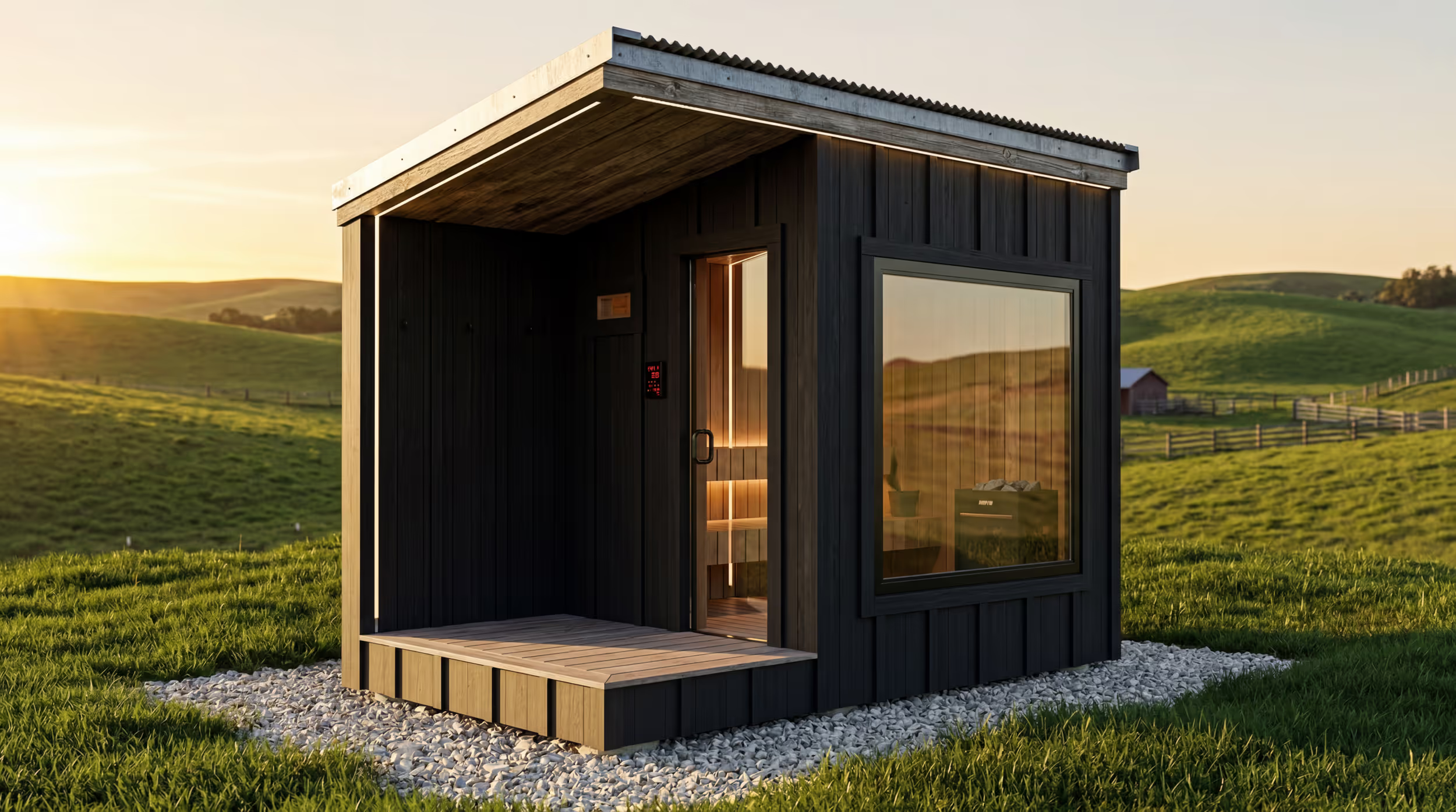
A sauna is not furniture.
It is not an accessory.
Once placed, it becomes part of the landscape and part of daily life.
For that reason, placement deserves as much consideration as the sauna itself. Thoughtful placement improves the experience, simplifies ownership, and avoids compromises that only become visible after the first few months of use.
Start With How You’ll Use It
Before thinking about yards, decks, or views, start with behavior.
When will you use the sauna most often? Early mornings. Evenings after work. Weekends with others. The easier it is to access, the more consistently it will be used. A sauna tucked too far away—or placed where it feels exposed—often becomes occasional rather than habitual.
The best placement supports routine without requiring motivation.
Proximity Matters More Than Distance
Many people assume a sauna should be as far from the house as possible. In practice, closer placement usually leads to better use.
A short walk encourages year-round sessions, especially in cold or wet weather. Proximity also simplifies utilities, lighting, and maintenance. The sauna should feel connected to daily life, not separate from it.
That said, closeness does not mean visibility. Privacy can be achieved through orientation, landscaping, and thoughtful siting.
Consider the Ground First
Every sauna needs a stable, level foundation. Whether that is a concrete pad, helical piers, or a reinforced deck depends on site conditions.
Before committing to placement, consider:
- Soil stability and drainage
- Snow accumulation and melt patterns
- Seasonal ground movement
Good drainage matters more than perfection. Water should move away from the structure naturally, without pooling beneath it.
Think in Seasons, Not Just Summer
Placement decisions made in summer often feel different in winter.
Consider prevailing winds, sun exposure, and snow drift. A sauna that is sheltered from wind and oriented to catch low winter light will feel more comfortable year-round. Small shifts in orientation can significantly change how the space is experienced.
Lighting also matters. Soft exterior lighting along the path and at the entry extends use into darker months without drawing attention.
Utilities Without Complication
Electric or wood-fired, every sauna requires planning.
Electric models benefit from shorter runs and straightforward access to power. Wood-fired saunas require thoughtful chimney placement, clearance, and wood storage. In both cases, planning utilities early prevents visual clutter later.
A clean exterior depends on what you don’t see.
Leave Space to Arrive and Leave
The transition into and out of sauna matters.
A small area to pause, cool down, or sit quietly after a session completes the experience. This does not require a large deck or elaborate structure—just enough room to let the body adjust naturally.
Sauna is not something you rush into or out of.
Placement Is a Design Decision
The best sauna placements feel inevitable once built—as though they were always meant to be there.
They consider use, climate, access, and time. They reduce friction rather than adding it. And they support consistent use, which is where sauna delivers its real value.
A well-placed sauna does not call attention to itself.
It simply becomes part of life.
Stay Updated
Follow The Warmth
New saunas, thoughtful accessories, and updates as VärmHūs grows. Occasional emails. No noise. Just what matters.