Sauna as Recovery: What Happens When Heat Is Done Properly
When heat is done properly, sauna becomes more than relief—it becomes recovery. A grounded look at why traditional sauna works.
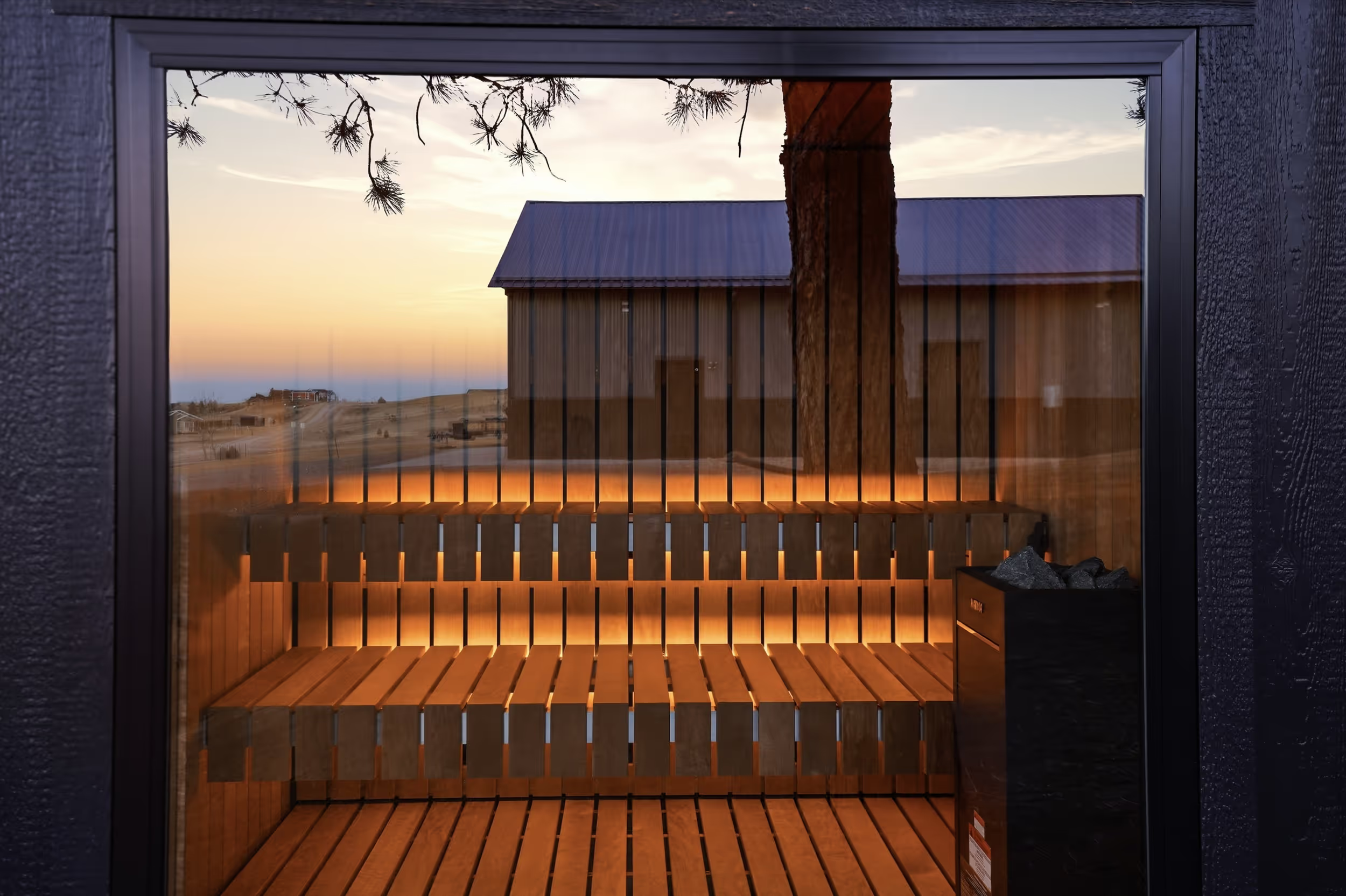
Recovery is often framed as something active—stretching, rolling, compressing, optimizing. But some of the most effective recovery practices are passive. They work not by forcing change, but by allowing the body to return to balance.
Sauna, when done properly, belongs in this category.
For centuries, sauna has been used not as a performance tool, but as a recovery space. After labor. After training. After long days that leave the body tight and the nervous system overstimulated. Its value lies not in extremes, but in consistency and quality of heat.
Heat That Relaxes Instead of Overwhelms
Not all heat produces the same result.
In a true sauna, heat is stored in stone and released gradually into the space. The air warms evenly. Steam is introduced intentionally through water on stone—löyly—softening the heat rather than intensifying it. The result is an environment that encourages the body to let go instead of brace.
When heat is harsh, dry, or uneven, the body resists. Muscles remain guarded. Breathing becomes shallow. Recovery stalls.
Proper sauna heat does the opposite. Muscles loosen without effort. Joints feel less compressed. Breathing deepens naturally. The body shifts out of a heightened state and into one of release.
Stillness as a Recovery Tool
Recovery requires stillness.
In sauna, there is nothing to do and nowhere to go. The absence of movement is not accidental—it is essential. As the body warms, blood flow increases naturally, supporting circulation without impact or strain. At the same time, the nervous system begins to downshift.
This is where sauna differs from many modern recovery methods. It does not demand attention or discipline. It invites presence. The body does the work on its own.
For athletes and physically active people, this matters. Recovery is not only about tissues—it is about the system as a whole returning to baseline.
Consistency Over Intensity
Sauna works best when it is repeatable.
Short, regular sessions create rhythm. The body learns the pattern: enter heat, breathe, rest, cool, return. Over time, this rhythm becomes familiar. The transition into relaxation happens more quickly. The benefits compound not through intensity, but through use.
This is why traditional sauna was never occasional. It was integrated into daily and weekly life—not as a treatment, but as maintenance.
Designed for Recovery, Not Stimulation
When sauna is designed correctly, the environment supports this process.
Natural wood moderates humidity and temperature. Stone regulates heat. Proper airflow keeps the room breathable. There are no sharp stimuli competing for attention—no screens, no noise, no excess.
What remains is warmth, stillness, and time.
Recovery does not need to be engineered to be effective. It needs space.
Sauna, done properly, provides that space—quietly, reliably, and without asking the body to do more than it already knows how to do.

Stay Updated
Follow The Warmth
New saunas, thoughtful accessories, and updates as VärmHūs grows. Occasional emails. No noise. Just what matters.